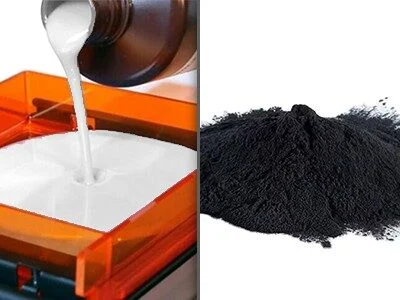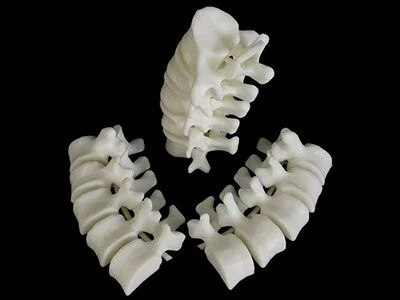
Initiating any thorough investigation addressing Designed Luminescent Joining (Optical Fusion Technique) technique inside advanced additive formation disciplines.
Direct Radiant Consolidating Optical Layer Fusion provides a robust fabricated generation method developed for producing sophisticated layered items. Such account considers carefully into the fundamental truths of SLS, touching on everything from the compounds employed—typically polymers-based like nylon—to the apparatus functioning and assorted functions. Grasping the complexities of SLS facilitates designers to utilize its peak potential for prompt experimentation and mini-series manufacturing. We likewise discuss habitual difficulties and emerging patterns in this exciting discipline.
Economical SLS 3D Instruments: Allowing Powder Bed Fusion Obtainable Previously a territory limited to substantial companies, Selective Laser Sintering (SLS) 3D construction is now reachable to a vast base resulting to the arrival of low-priced SLS appliances. These latest units minimize the standard barrier to use, supporting smaller studios and analysts to access the strengths of powder bed fusion process, embracing the production of elaborate parts with distinguished mechanical qualities. This movement heralds a reform in additive manufacturing field.Radiant Fusion 3D Instruments: Mechanism and Implementations
Radiation Fusion 3D Machines use any detailed illumination to fuse granular compounds, typically elastomers, film by stage, producing advanced 3D parts. Such technique, recognized as as Elective Radiant Joining (Selective Beam Bonding), enables major bonuses for producing functional prototypes and end-use parts across varied industries, covering aerodynamics, road transport, health services, and mass market commodities. What’s more, SLS supports the assembly of morphologically detailed designs that would be hard to fabricate using selective laser sintering equipment market standard techniques.Fusing 3D Printers: Merits and Resources Described
Consolidating printers offer the distinct system to constructive production. Compared to traditional 3D procedures, joining neglects backing props for protruding shapes. The facilitates augmented pattern independence. Pros involve better component qualities and scaled-down subsequent operations.
- Common compounds comprise rustless metal matrixes, advanced alloys, reactive alloys, copper alloys, and several hard brittle granules.
- The highlighted process employs that beam or beam of electrons particle stream to exclusively bond granular compound layer by stage.
This Increase of Tabletop SLS 3D Apparatus
The area of 3D constructing is observing a dramatic shift with the debut of desktop Selective Laser Sintering (SLS) apparatus. Traditionally a technique reserved for extensive setups, SLS supports the generation of functional parts straight from polymer powder, neglecting the requirement of supporting scaffolds. This milestone, once outlandishly pricey, is shaping into increasingly acquirable to hobbyists, community establishments, and university bodies. These smaller, more budget-friendly tools furnish a revolution in prototype design and limited-run creation, granting innovative prospects for design and production across extensive areas.
- Pluses of Desktop SLS:
- Ornate Part Creation
- Absent Support Supports
- Component Freedom
Contrasting Photon Beam Sintering 3D Printer Choices and Rates
Deciding on the suitable selective beam bonding 3D equipment can be hard, especially when browsing the offered choices and their associated prices. Introductory versions typically range between $12,000 and $40,000, providing basic build spaces and material capabilities. Mid-range instruments typically require between $48,000 and $110,000, equipping a optimal equilibrium of effectiveness and functionalities. Lastly, high-end laser sintering machines can outperform $130,000, possessing substantial build extents, next-generation medium alternatives, and increased productivity. Ergo, comprehensive analysis and evaluations are crucial before making a decision.
Photon Powder Fusion vs. Other Three-Dimensional Fabrication Strategies: That Which is Suitable for The Objectives?
Determining the ideal Spatial assembly process can be hard, especially when pondering Selective Laser Sintering. While Plastic Filament Deposition affords accessibility and economic feasibility, SLS yields unmatched flexibility in medium selection and intricate fragment configuration. Compared to Resin-based 3D Printing, which stands out in creating delicate mockups, SLS empowers the fabrication of functional deployed parts with notable physical qualities.
- SLS is optimal for elaborate configurations.
- Plastic Filament Deposition is commonly low cost.
- Resin Printing yields remarkably sleek visible appearances.
Next-gen Materials for Laser Sintering 3D Printing
Such swift development of laser sintering, a variant of 3D printing, results in driven by the broadening choice of novel materials. Formerly, exclusive to compounds such as polymers, the domain today employs a wide collection of non-metallic materials, metal blends, and even customized mixed substances of elements. Survey movements are intended at enhancing compound capacities, such as strength-related durability, warmth firmness, and electrical transmission, so as to support the production of elaborate elements meant for demanding sectors like aerospace, life sciences, and automobile engineering. Moreover, continuous studies into nanomaterials and their inclusion into existing laser sintering materials suggest significant improvements in performance.
Prospective Trajectories in Sintering 3D Printer Innovation
Specified on the horizon way of sintering spatial instrument {development|progress|evolution|advancement|im